

EXPLORE
Kindergarten is a fantastic year of both social and academic growth. The kindergarten year lays the foundation for future success in all aspects of life. We work hard to develop our student’s sense of wonder and excitement about the world.
Language Arts
Kindergarten is heavily focused on phonological awareness. We work on the students’ knowledge of all 26 letters and sounds, and from there, we learn how to start building and breaking apart words. We also dive into books, exploring their different parts and using our knowledge of letters and sounds to begin to read!
Math
Kindergarten focuses on numbers and number sense. We work on counting orally and counting objects. By the end of Kindergarten, students will be able to count to 100, count 30 objects, recognize numbers written to 30, and be able to tell one more or one less number up to 50. We will also go over shapes, patterns, and the beginning of addition and subtraction.
Science
Kindergarten will begin to explore science and the scientific method. We talk about our five senses and do some exploration using our five senses. We discuss properties of water, along with force and matter, including the motions of push and pull. Finally, we end with talking about changes over time. This includes talking about animals, plants, and things in nature.
Social Studies
Kindergarten works on becoming good citizens in school and at home. We learn about maps and how to use them, including positional words and identifying land and water on a map. We discuss famous Americans and important holidays celebrated by various cultures in our country. Finally, we talk about ways that people earn money, what jobs they could do when they grow up, and people who help our community.


First grade is a magical year! The academic and social growth we see in our first graders each year is amazing. As our world has changed, so have our classrooms. Our first grade program uses digital tools, but we still focus on developing a love of learning.
Language Arts
The main focus in language arts is reading. The students will continue to develop phonics, decoding strategies, sight words, vocabulary, fluency, and comprehension skills as they mature into proficient readers. The students will work at their developmental reading levels as they strengthen their individual skills. They will begin to communicate through their writing by generating their own ideas, starting each sentence with a capital letter, using descriptive words, and spelling sight words correctly.
Math
The main focus in math is number sense. The students will learn a variety of strategies to improve this fundamental skill. They will take part in many hands-on activities to practice number sense at their developmental levels. The students will use their number sense to count and sort objects, complete simple addition and subtraction, recognize patterns, tell time to the hour and half hour, count coins, understand simple fractions, and practice simple measurement.
Science
In science the students will become scientific investigators as we study matter, Earth and sun relationships, seasonal changes, natural resources, force, energy and motion, and basic needs of plants and animals.
Social Studies
In social studies the students will learn about citizenship, American and Virginia symbols, Virginia leaders, Virginia climate and seasons, landforms in Virginia, map skills, and simple economics.
By second grade, most students have settled in and have begun to use the skills they learned in kindergarten and in first grade. They become more analytical in their thinking as they take on more complicated assignments. Second grade marks a year of transition as children learn to become self-directed, independent learners.
Language Arts
Students will get to explore various genres of literature while also learning foundational decoding and phonics skills. Second graders will also learn and demonstrate higher-level literacy skills such as comprehension of fiction and nonfiction texts and written expression.
Math
In second grade, students will work to strengthen their number sense with the use of manipulatives, problem solving and hands-on practice. Students will be exploring relationships between place value and addition and subtraction. Second graders will also be building on previously learned material in telling time, patterning, measurement, data collection and graphing, and estimation.
Science
Second graders will put their scientific investigation skills to use by observing and conducting experiments! They will study changes in phases of matter (solid, liquid, gas), plant and animal life cycles, seasonal changes affect plants and animals, and weather changes and patterns.
Social Studies
From American Indians to famous Americans, second graders will be learning about some of the famous people who made our country great! Students will also learn about the responsibilities of good citizens and how people from diverse backgrounds participate and contribute to their communities.In doing so, they will exhibit the CCPS Core Values of respect, responsibility, honesty and accountability for culturally diverse people and populations. Finally, second graders will apply concepts of geography, civics, and economics to their everyday lives.


In third grade, children start putting the learning pieces together to take on more complicated assignments. This is the first year they begin to do some work independently rather than with the explicit directions given in earlier grade levels. Third grade is an exciting year because before third-grade, students learn to read – but beginning in third-grade, students read to learn!
Language Arts
The main focus in language arts is reading. The students will continue to develop phonics, decoding strategies, sight words, vocabulary, fluency, and comprehension skills as they mature into proficient readers. The students will work at their developmental reading levels as they strengthen their individual skills. They will begin to communicate through their writing by generating their own ideas, starting each sentence with a capital letter, using descriptive words, and spelling sight words correctly.
Math
The main focus in math is number sense. The students will learn a variety of strategies to improve this fundamental skill. They will take part in many hands-on activities to practice number sense at their developmental levels. The students will use their number sense to count and sort objects, complete simple addition and subtraction, recognize patterns, tell time to the hour and half hour, count coins, understand simple fractions, and practice simple measurement.
Science
In science the students will become scientific investigators as we study matter, Earth and sun relationships, seasonal changes, natural resources, force, energy and motion, and basic needs of plants and animals.
Social Studies
In social studies the students will learn about citizenship, American and Virginia symbols, Virginia leaders, Virginia climate and seasons, landforms in Virginia, map skills, and simple economics.
Fourth grade is a wonderful year full of transition and implementation. You will be amazed at how they grow, learn, and mature over the year. They will continue to develop work habits and study skills that will make them more eager to seek answers, ask more questions, organize self and become more independent on their work.
Language Arts
Students will explore various genres of literature in 4th grade. They will demonstrate comprehension of fictional texts, literary nonfiction texts, and poetry. Fourth graders will write in a variety of forms to include narrative, descriptive, opinion, and expository.
Math
Students will continue to build their number sense. In fourth we will work with larger numbers and higher level mathematical concepts. This year we will add and subtract fractions, decimal concepts, explore patterns, learn elapsed time, estimate, and work on place value to the hundred millions place.
Science
In previous years we have studied electricity and circuits in fourth grade. This year we will be studying oceans instead which is very exciting! It will go along well with our studies of Earth including its resources, weather, ecosystems, plants, and animals.
Social Studies
Fourth grade focuses on Virginia Studies. The curriculum and standards allow students to develop a greater understanding of Virginia’s rich history, from the cultures of its native peoples and the founding of Jamestown to the present. We begin by studying the five regions of Virginia and their products and industry of the region. We learn about the Revolutionary War, Civil War, westward expansion, and the 1900s through present time.
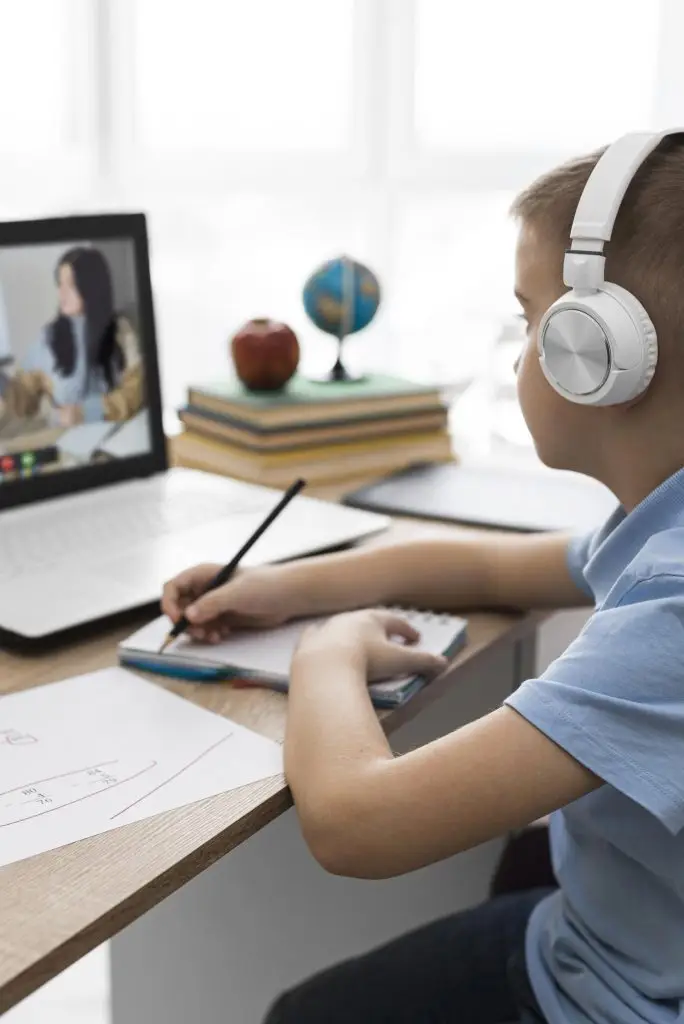

This is such an exciting year for students as they are enjoying their last year in elementary school and preparing for that journey into middle school.
In fifth grade, teachers challenge students with long-term projects that require planning and organization. Parents, guardians and teachers can play a critical role in listening, reassuring and supporting the new individuals that are starting to emerge.
Language Arts
Students will continue to explore fiction, nonfiction, and poetry in 5th grade. They will demonstrate comprehension in all areas of literacy. Fifth graders will write in a variety of forms to include narrative, descriptive, opinion, and expository.
Math
Fifth grade math places emphasis on number sense with whole numbers, fractions, and decimals. This focus includes concepts of prime and composite numbers, identifying even and odd numbers, and solving problems using order of operations for positive whole numbers. Students will develop a working knowledge of fractions and decimals and use that knowledge to solve practical problems. Students will expand on their knowledge of probability and solve problems, using a sample space, a tree diagram, or the Fundamental Counting Principle. Students will be introduced to expressions within a variable. Students will solve problems using strategies including place value and the properties of addition and multiplication.
Science
In fifth-grade science we focus on student growth in understanding the nature of science. We focus on building on all of the fourth grade content and expanding on it and providing students with new content in Oceans, Plant and Animal Cells, Geology and the Rock Cycle.
Social Studies
In fifth grade social studies, we focus on the geography of our world. We talk about how to use maps, globes and a compass rose. Then we move into the five themes of geography. Next, we will take time to talk about each of the seven continents in depth.
Kindergarten and First Grade
Second and Third Grade
Fourth and Fifth Grade
Our Philosophy
Fitness Testing
Fitness Testing is a state mandated assessment that allows schools to gauge the improvement of physical fitness in students. The assessments consist of upper-body strength and endurance (90 degree push-ups), abdominal strength and endurance (curl-up cadence), flexibility (shoulder stretch), aerobic capacity (PACER), trunk strength (trunk lift). The administration and PTO community have decided that the skin fold test and BMI measurements will no longer be performed. The fitness test are administered twice a year, once in the fall, and a second time in the spring. The fall testing creates a baseline of data that allows a comparison to the spring testing. These tests are not graded. Any scores achieved remain confidential and will not appear on the students’ school record or PE grade. The goal of the testing is to show improvement through the school year. It helps the state decide priorities within physical education, and for administration to assess the performance of their teachers.
Students in kindergarten through fifth grade attend STEAM class once a week for 45 minutes. STEAM is an exploratory learning environment that incorporates Science, Technology, Engineering, Arts, and Math to engage students in dialogue, inquiring, creativity, and critical thinking. Students collaborate while using PBL strategies to provide engaging and authentic learning experiences.
Kindergarten Visual Arts
Kindergarten visual arts serves as a building block for further visual arts instruction. The curriculum places an emphasis on cognitive, affective, sensory and motor development using a problem-solving approach. Students learn that art is a personal expression, has value, teaches about other times and places, and connects to other areas of learning. Students grow to understand that their works of art are unique and valuable.
First-Grade Visual Arts
The first-grade visual arts curriculum serves as a continuation of visual arts instruction. The standards continue to emphasize that the visual arts are about ideas. Development continues in cognitive, sensory, affective, and motor domains. Standards will continue to emphasize the language of art. Art production will focus on increased communication, self-expression, and the depiction of stories and events. Students will learn that people have different responses to the visual arts.
Second-Grade Visual Arts
In science the students will become scientific investigators as we study matter, Earth and sun relationships, seasonal changes, natural resources, force, energy and motion, and basic needs of plants and animals.
Third-Grade Visual Arts
Third-grade visual arts emphasize learning through inquiry. Students will examine aspects of the artistic process: idea generation, problem solving and self-assessment. Students will investigate the integral role of art and architecture within ancient cultures; and they will combine knowledge of ancient art and architecture, effective artistic processes and skills and a variety of ideas to produce works of art.
Fourth-Grade Visual Arts
Fourth-grade visual arts continue to emphasize the elements of art and the principles of design as the basic building blocks for art appreciation and production. Students will explore a range of materials and subject matter. Art historical emphasis is on the artists, events and environment in Virginia from colonial times to the present. Students will examine the influence of the past on contemporary culture.
Fifth-Grade Visual Arts
In fifth-grade visual arts, students use their knowledge and skills to synthesize information, thus allowing them to produce and respond to works of art. Emphasis is on communication of personal values and beliefs in art appreciation and production. Study relates to art produced by cultures from Pre-Columbian times to 1877. Students will gain fluency in using and understanding the elements of art and the principles of design as they relate to artistic expression and communication.